

Team
Valeria Fierro
Matt Dietzman
Bright Hoang
Sam Lopez
Lana Vuong
Timeline
30 weeks
Role
Product Designer
Tools
FigJam
Figma Design
Google Forms
Illustrator
Overview
Personal Finance for Gen Z, by Gen Z.
I served as a product designer for an app to help Gen Z learn more about the fundamentals of financial literacy, where I conducted competitor analysis and user research and translated insights into a tangible prototype.
The result is $avr: an app that educates users and builds confidence in financial literacy through interactive modules to prepare for managing their finances in the real world.

Context
Gen Z's Financial Struggles
Despite making up 27% of the workforce by 2025, over a quarter of Generation Z have reported lacking confidence with their financial literacy, making them the most financially unconfident generation.
We want to bridge this gap and create a solution that introduces important financial concepts to Gen Z early in their financial journeys and set them up for financial success.
Solution
Introducing: $avr.
$avr. is a learning app that simulates the process of managing your personal finances in the real world: earning in-app currency by completing learning modules that build their financial literacy skills and managing their “money” by saving, investing, saving for retirement, etc.


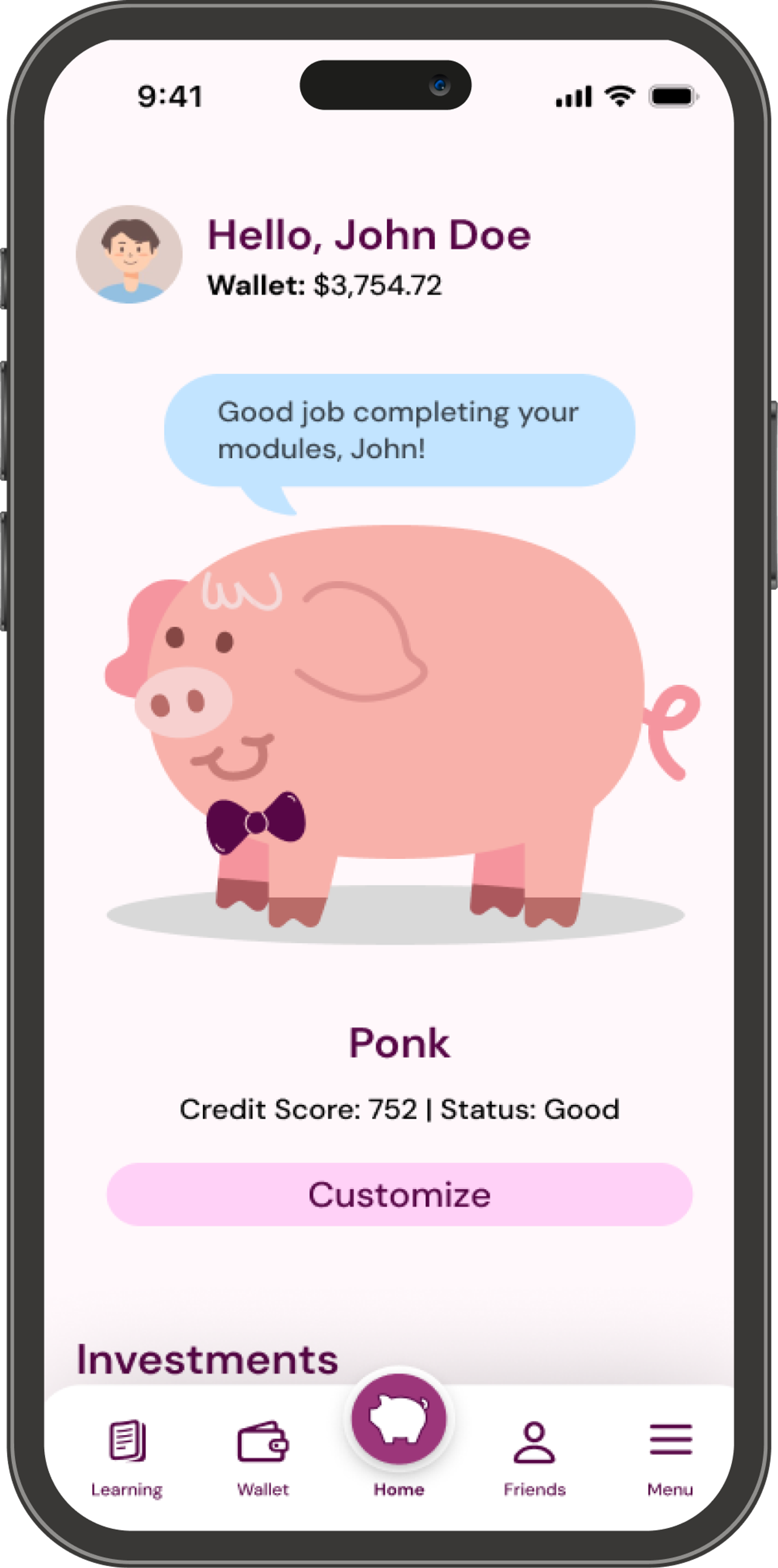
Users can see a quick snapshot of financial progress, compete with their friends, customize their character, and discover new learning modules.

A more thorough breakdown of the user’s financial progress can be found in the Wallet page, where totals, trends, and recent transactions can be seen for various accounts.
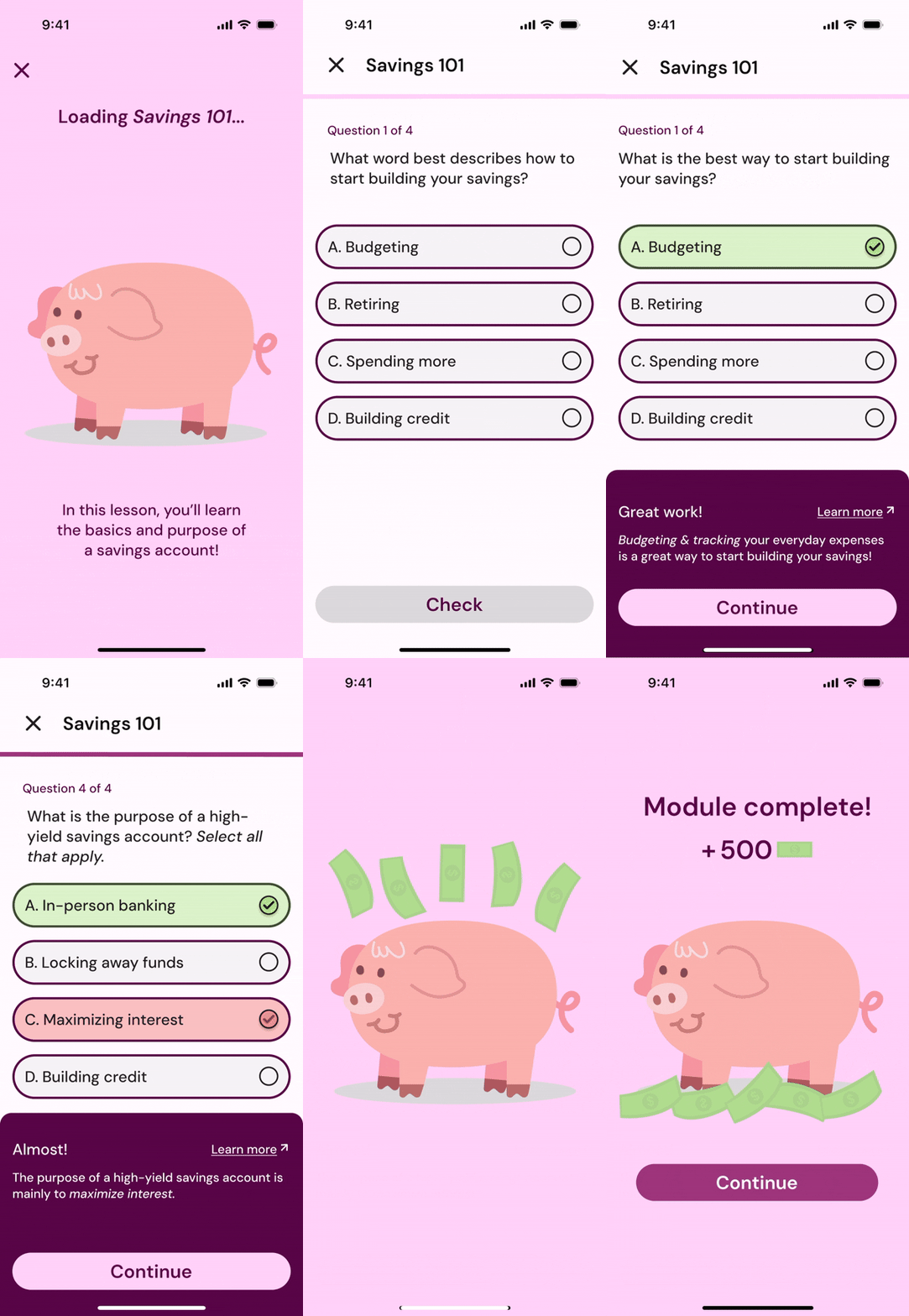
To supplement these interactive simulations, we created interactive quiz-like learning modules to keep the information digestible, convenient to learn, and fun.
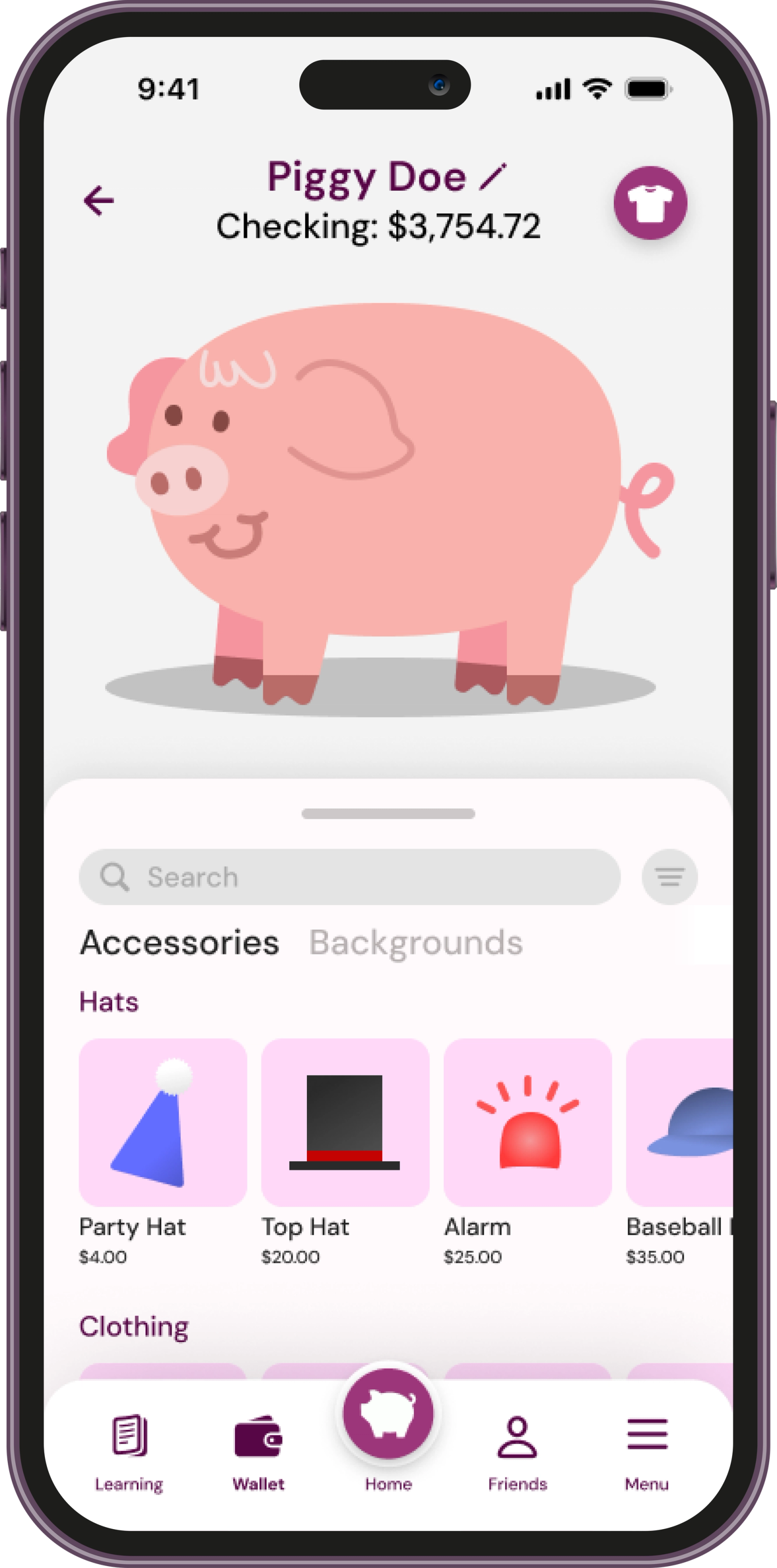
Using the money earned from completing learning modules and investing, users can buy accessories for their pig, which serves as the core incentive for our app.
Competitive Analysis
Existing Personal Finance Apps
Through competitive analysis, we learned that educational competitors are effective, but there's a lot of conflicting/wrong information, whereas existing financial apps/resources can be confusing for those with little/no prior knowledge, and apps targeted at beginners/Gen Z often lack helpful content/limit possible engagement for users.
nerdwallet

youtube

khan academy

school courses

Pros ✅
Trusted & verified, well-established brand, wide variety of resources
Pros ✅
Wide variety of content
Pros ✅
Trusted & verified, well-established brand
Pros ✅
Teaches good fundamentals
Cons ❌
Unengaging & contains jargon
Cons ❌
Content is not verified & not always trustworthy
Cons ❌
Relatively limited content, not personalized
Cons ❌
Stress from grades, tuition makes classes less accessible
User Research
“I mostly have no idea what I'm doing when it comes to money.”
We conducted surveys to gather broad insights, then conducted interviews to gain a more in-depth understanding of Gen Z’s emotional responses, motivations, and specific challenges related to financial literacy.
Overall, participants were generally not very knowledgeable, but had a clear interest in hands-on, digestible, engaging, and practical learning, with clear step-by-step guidance, and reliable information tailored to their own financial situations.


Basic familiarity with checking, savings, & credit
Struggle with investing, retirement, & taxes
Not knowledgable/confident enough to teach others
Prefer personalized, interactive learning methods
How might we...
Support Gen Z in developing stronger personal financial literacy skills by making the learning process fun and engaging?
Ideation
Learning Modules and Micro-Investing
After considering various ideas, we decided to focus on creating micro-investing and learning modules that let users simulate investing without significant amounts of money and learn key personal finance concepts.
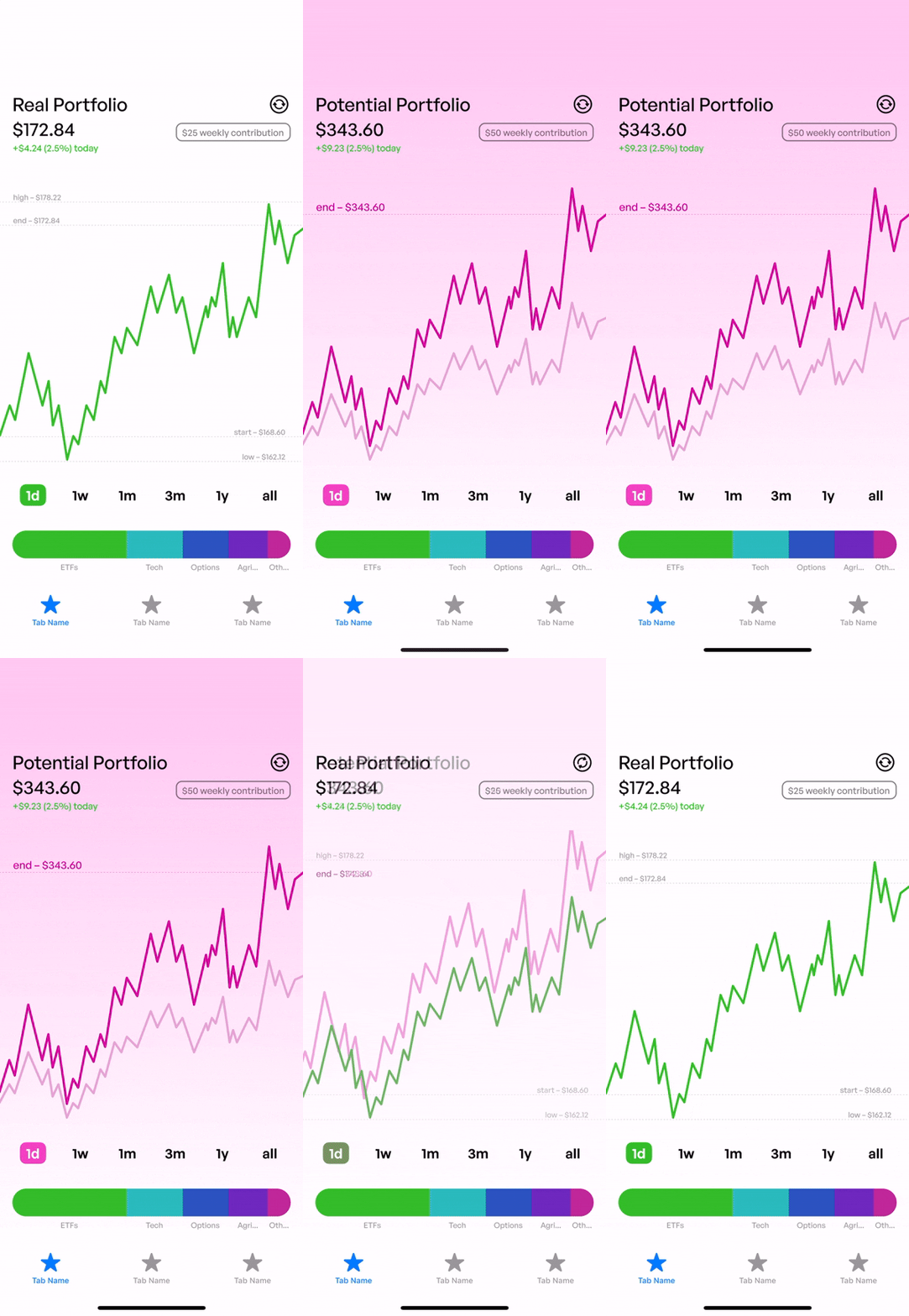
Based on our user research, we thought to "inflate" the amount of money in the user’s in-app portfolio in hopes of motivate users to invest more money.


Obstacles
Pivoting Away from Micro-Investing
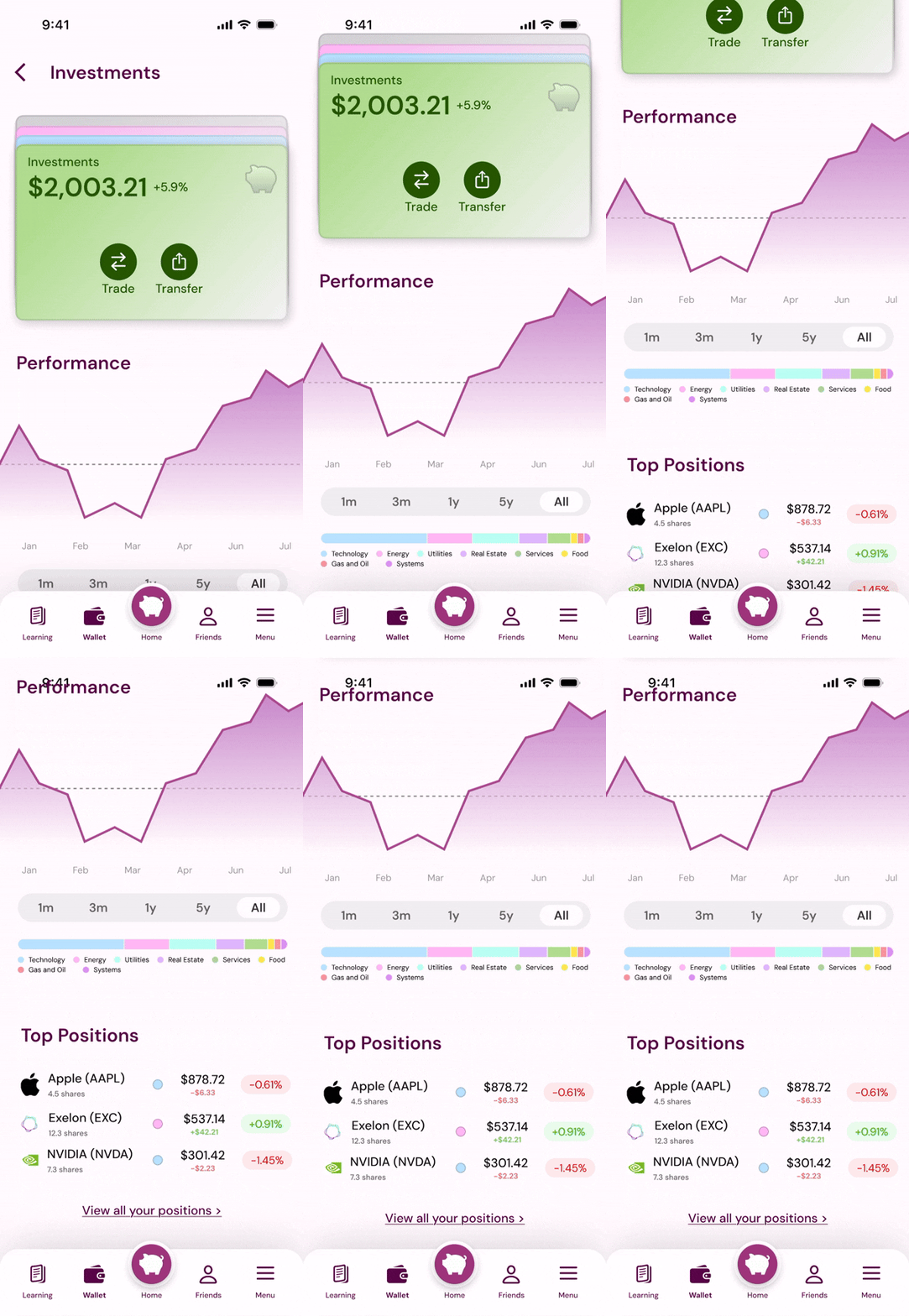
After user testing, our findings indicated that investing real money was daunting for people inexperienced in finance, so we switched to paper trading (investing fake in-app currency) instead.
Switching to paper trading allowed us to directly reward users for completing learning modules and make our app more approachable.
Micro-investing
Paper trading
Design
Connecting Main Features
To connect the learning modules and paper trading features of our app, users are only able to unlock the simulated financial products (e.g., checking, investments, etc.), once they’ve completed the respective learning module, encouraging users to practice and build their confidence in investing in real life.


Adding Moments of Joy
To keep users motivated and engaged, they can use money earned from completing learning modules and investing to buy accessories for their piggy avatar!







Impact
Potential Success Metrics
Although we did not collect metrics of the success of our app, these are the key metrics I would track: number of downloads/installs to gauge interest, percentage of day 1 retention to see the number of users that return the day after installing, and the number of daily/monthly active users to measure retention and effectiveness of our app.
Reflection
What $avr. Taught Me
Add joy and whimsy! In earlier iterations of our user interface, half of our team wanted to go for a more modern and sleek look, but I suggested adding a little character (yay piggy!) and some color to make the interface more engaging and enjoyable.
Through this, I learned that joy and whimsy goes beyond aesthetics: that it can make daunting topics like financial literacy more approachable and your product more alive.